Energy. Compute. Community.
Iron Valley is a regional initiative exploring how Southern Utah can responsibly participate in the next generation of AI infrastructure, renewable energy, compute innovation, education, and sustainable economic development. We are not here with all the answers — we are here with a starting point, a set of questions, and an invitation to build a thoughtful framework together.
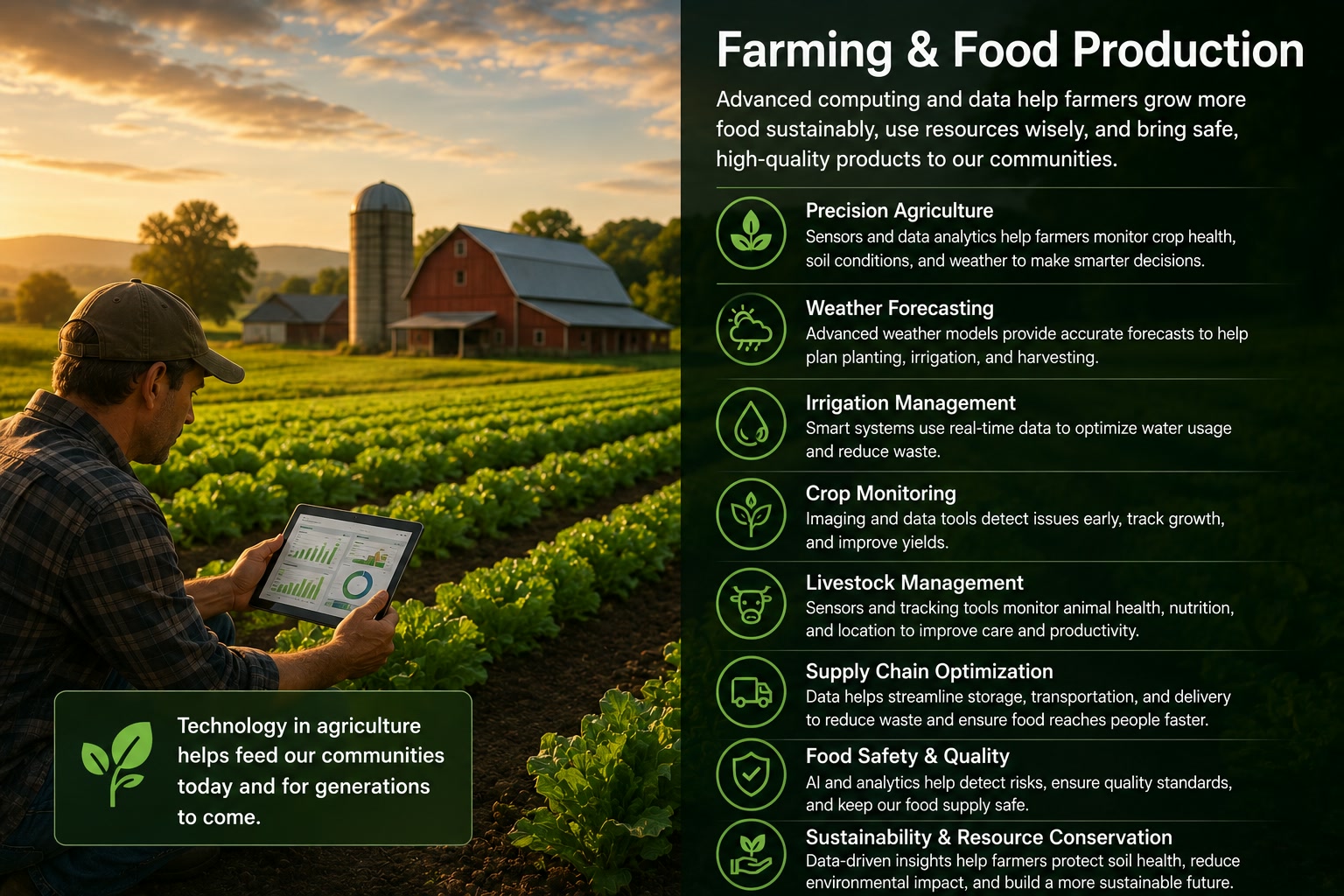
Most people interact with data centers dozens — and often hundreds — of times each day without realizing it. Phone calls, online banking, video streaming, GPS navigation, medical systems, cloud storage, emergency services, and increasingly artificial intelligence all rely on large-scale computing infrastructure operating behind the scenes.
Before communities can have a constructive conversation about where this infrastructure should go, it helps to understand what it actually supports. Data centers are not one single use case. They are part of the physical foundation behind modern communication, healthcare, research, energy systems, business software, and AI.

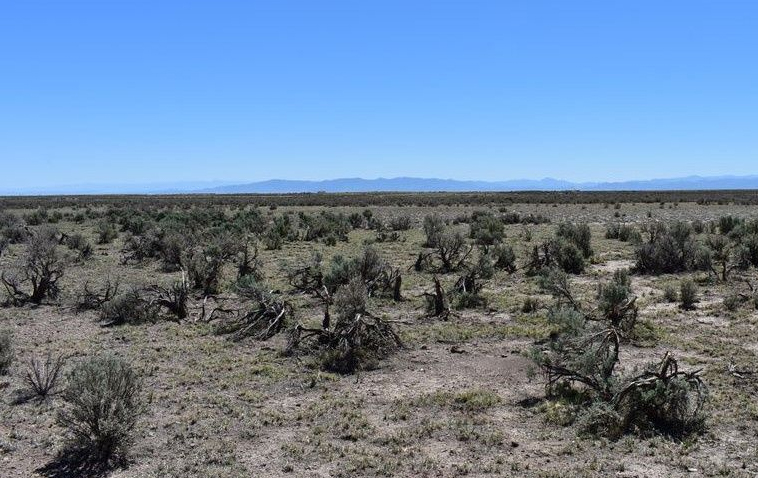
Iron County is entering a period where energy, land, data infrastructure, education, and community development may intersect in ways that could shape the region for decades. The purpose of Iron Valley is to create a serious, constructive forum for that conversation.
Our goal is not to promote growth at any cost. Our goal is to ask better questions: How can new infrastructure benefit residents? How should water, land, visual standards, and environmental stewardship be handled? How can Southern Utah University, local businesses, landowners, developers, and civic leaders participate in a long-term vision?
Iron Valley is a pilot idea: a place-based initiative that can explore how communities prepare for the AI economy while protecting what makes them worth living in.
Iron Valley is designed as a neutral framework for learning, convening, and communicating around the systems that make modern infrastructure possible. It should be broad enough to include developers, landowners, environmental experts, educators, county leaders, students, residents, and technology companies.
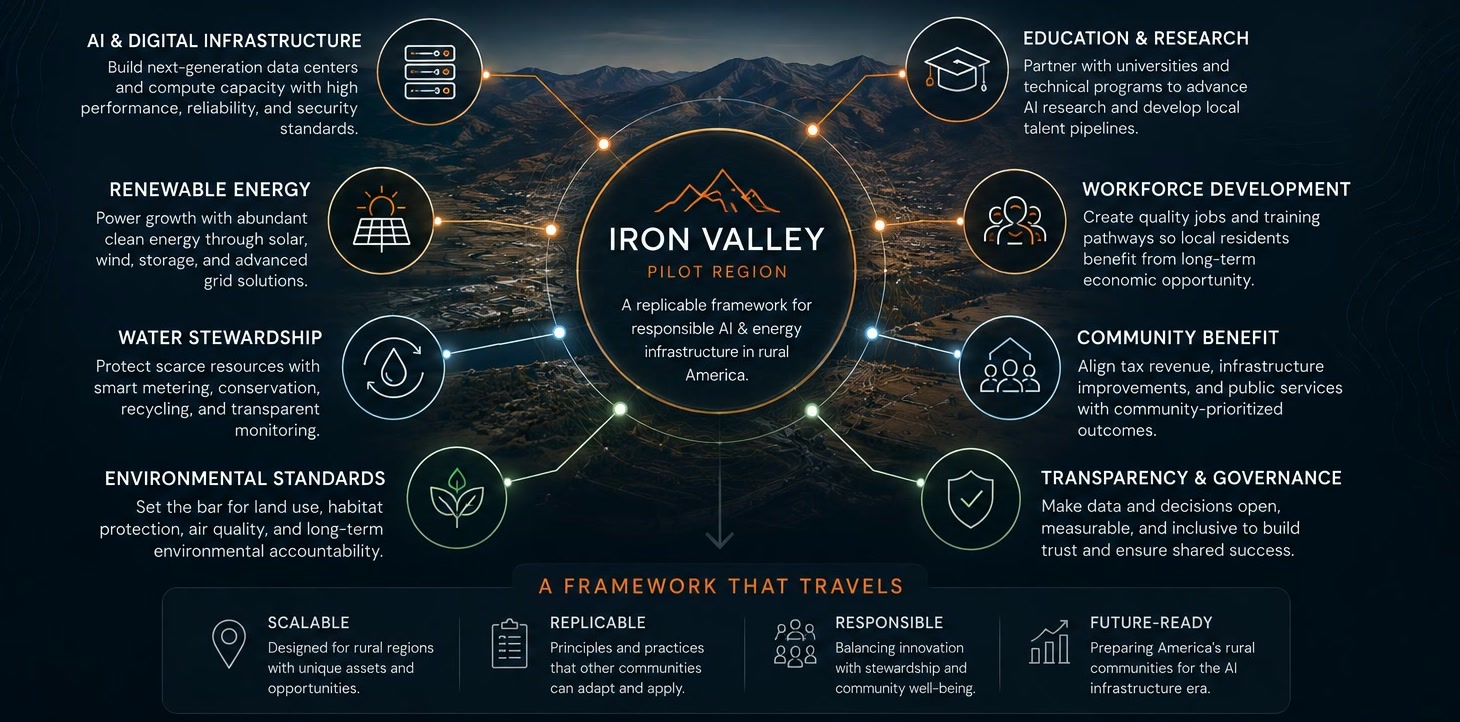
Exploring how data centers, rack space, GPU capacity, cloud infrastructure, and enterprise AI demand could become long-term economic development assets for rural regions.
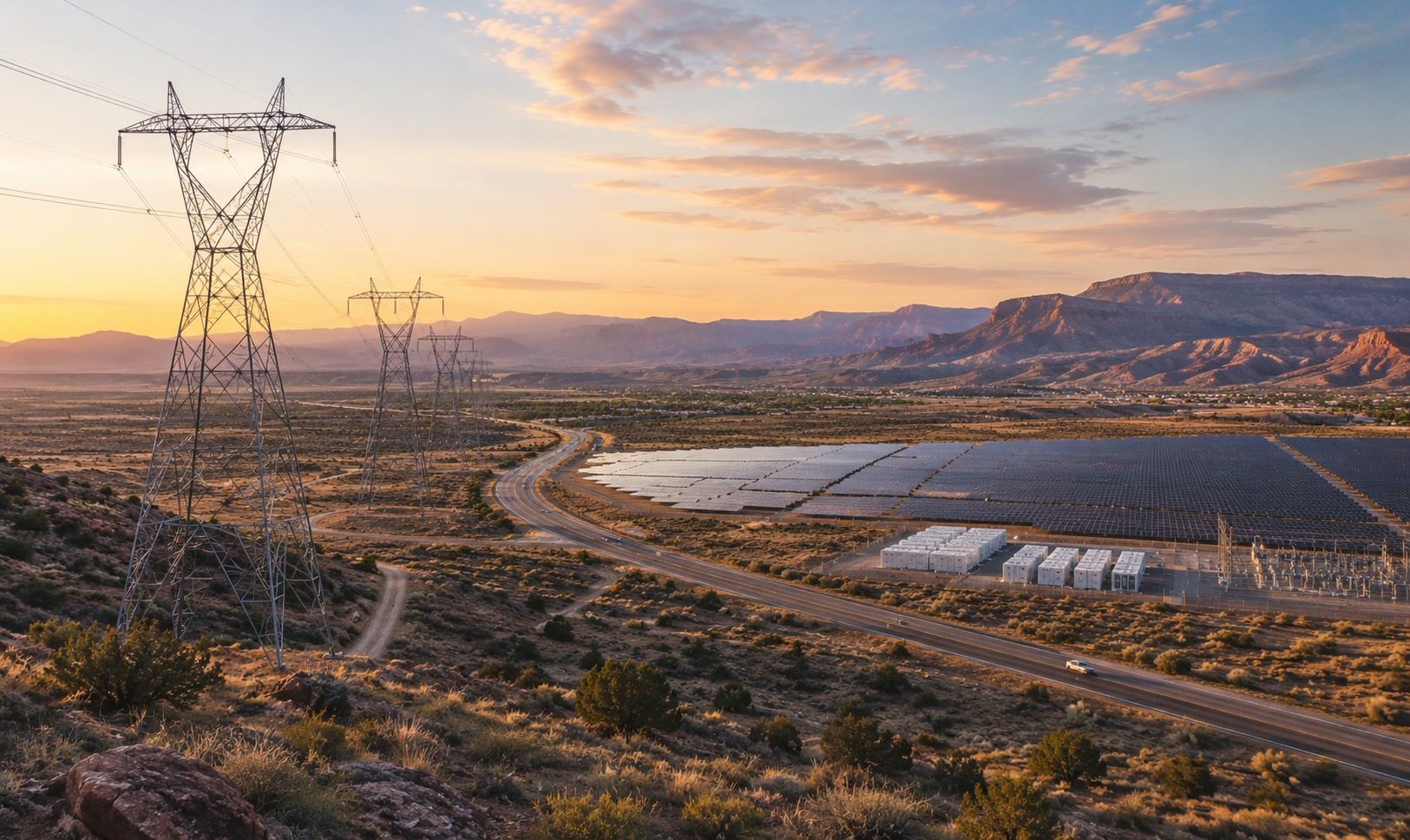
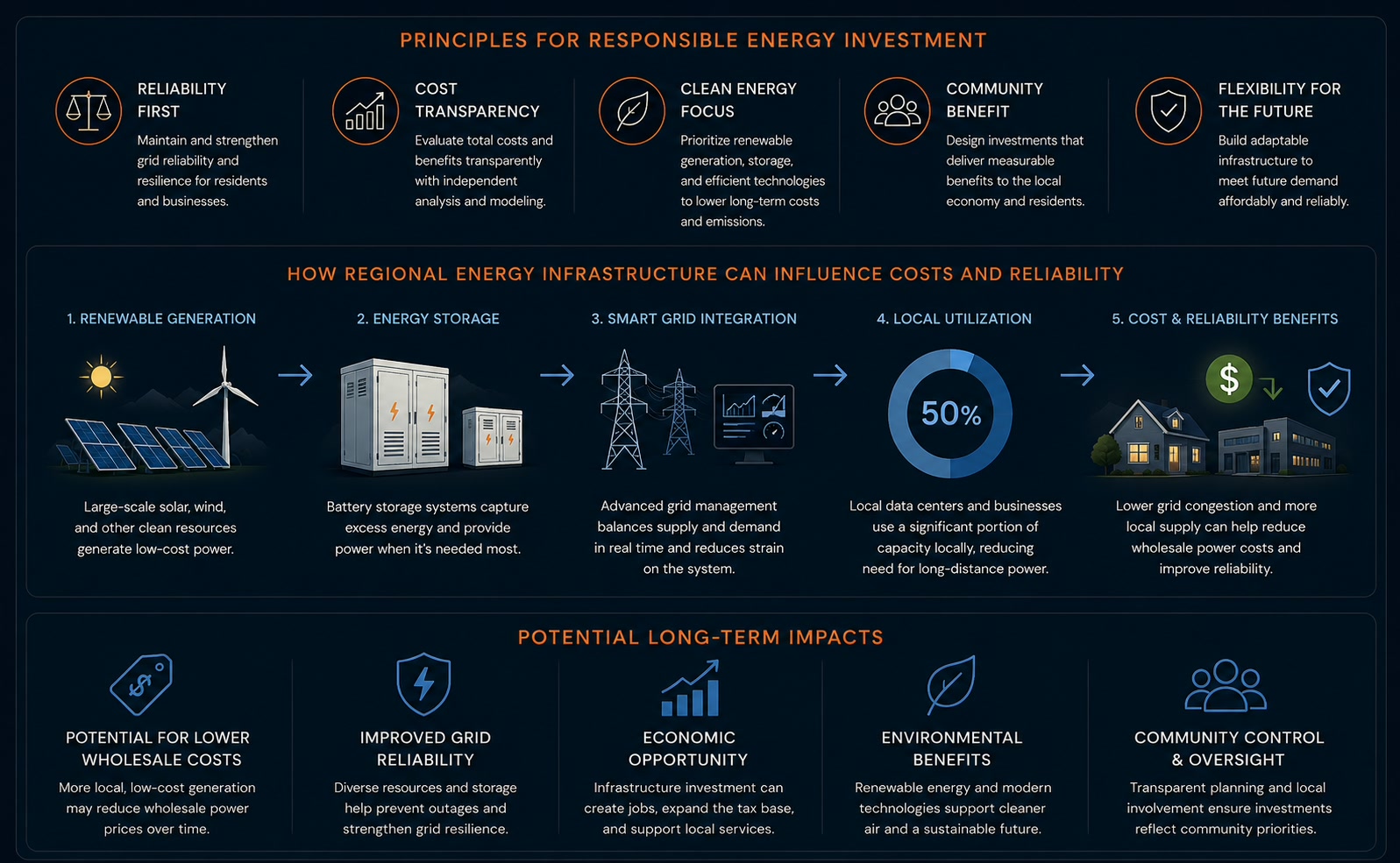
Studying solar, storage, natural gas reliability, geothermal possibilities, transmission access, grid stability, and how energy abundance can be aligned with community benefit.
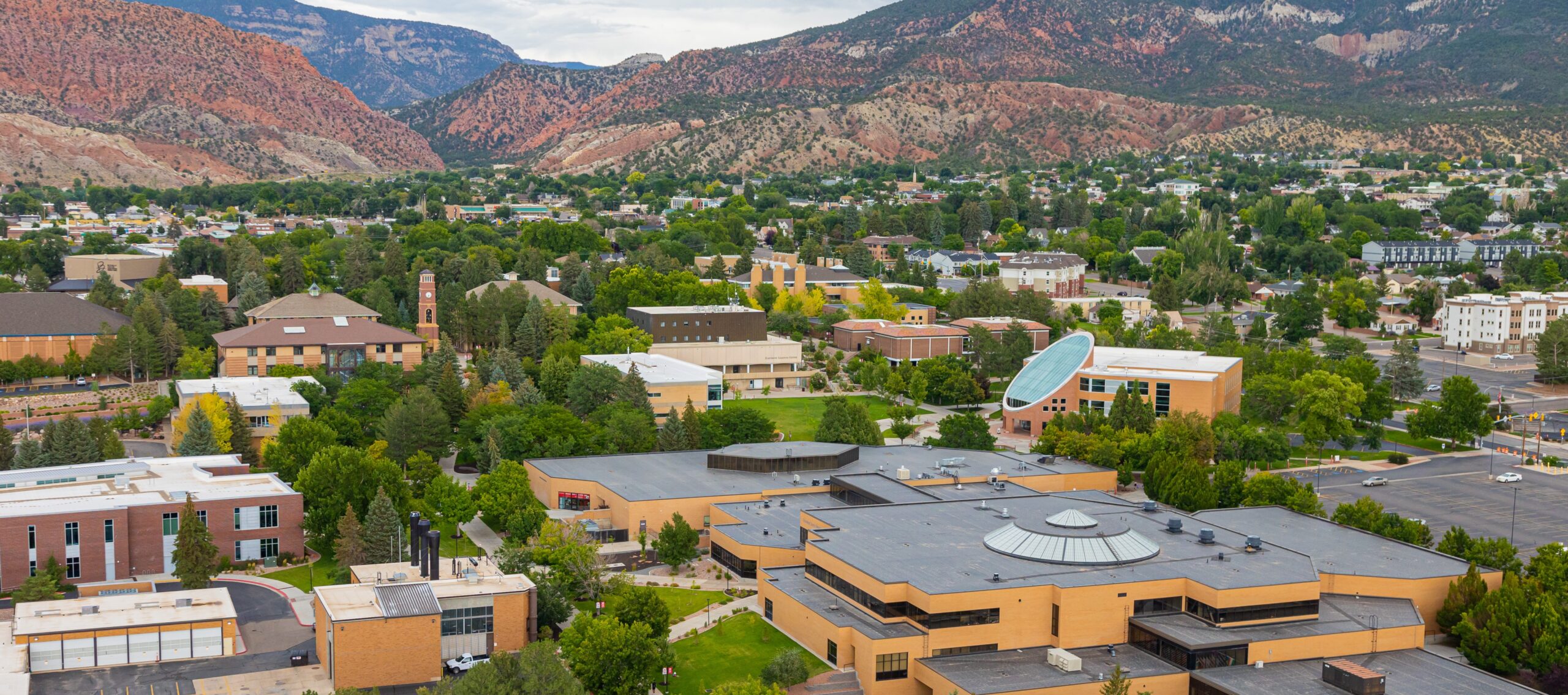
Exploring how Southern Utah University, technical training, internships, research, and entrepreneurship can prepare local students for the infrastructure and AI economy.
Compute power is becoming a core input of the modern economy. Regions with abundant, reliable, well-priced compute may be able to attract companies the way earlier regions attracted industry through rail, ports, electricity, airports, or fiber.
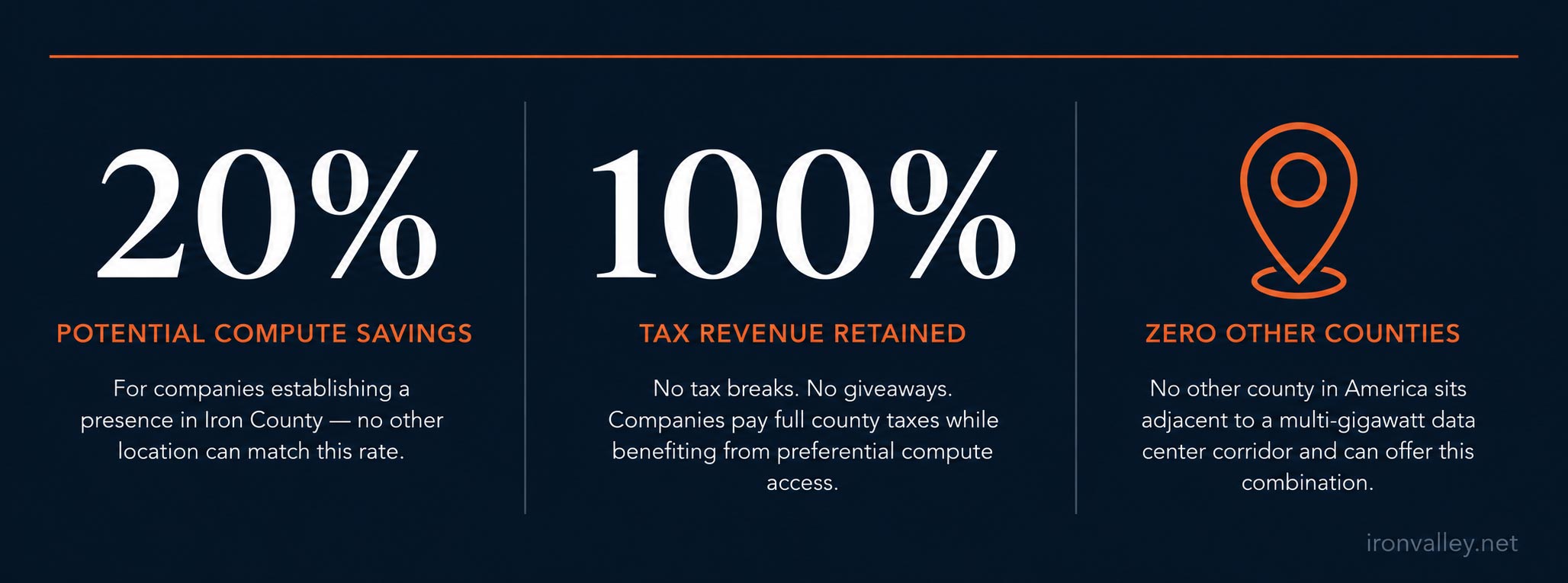
If large-scale data infrastructure is built in Iron County, the region should explore whether preferential compute access, rack space, AI services, or infrastructure partnerships could help attract employers, startups, research projects, and high-value jobs.
Any incentive model should be evaluated transparently: Does it protect tax revenue? Does it create jobs? Does it support SUU? Does it benefit residents? Does it preserve water, land, and quality of life?
Iron Valley should help develop a practical framework that communities can use before major infrastructure is fully built: standards for land use, environmental accountability, community benefit, education, and public communication.

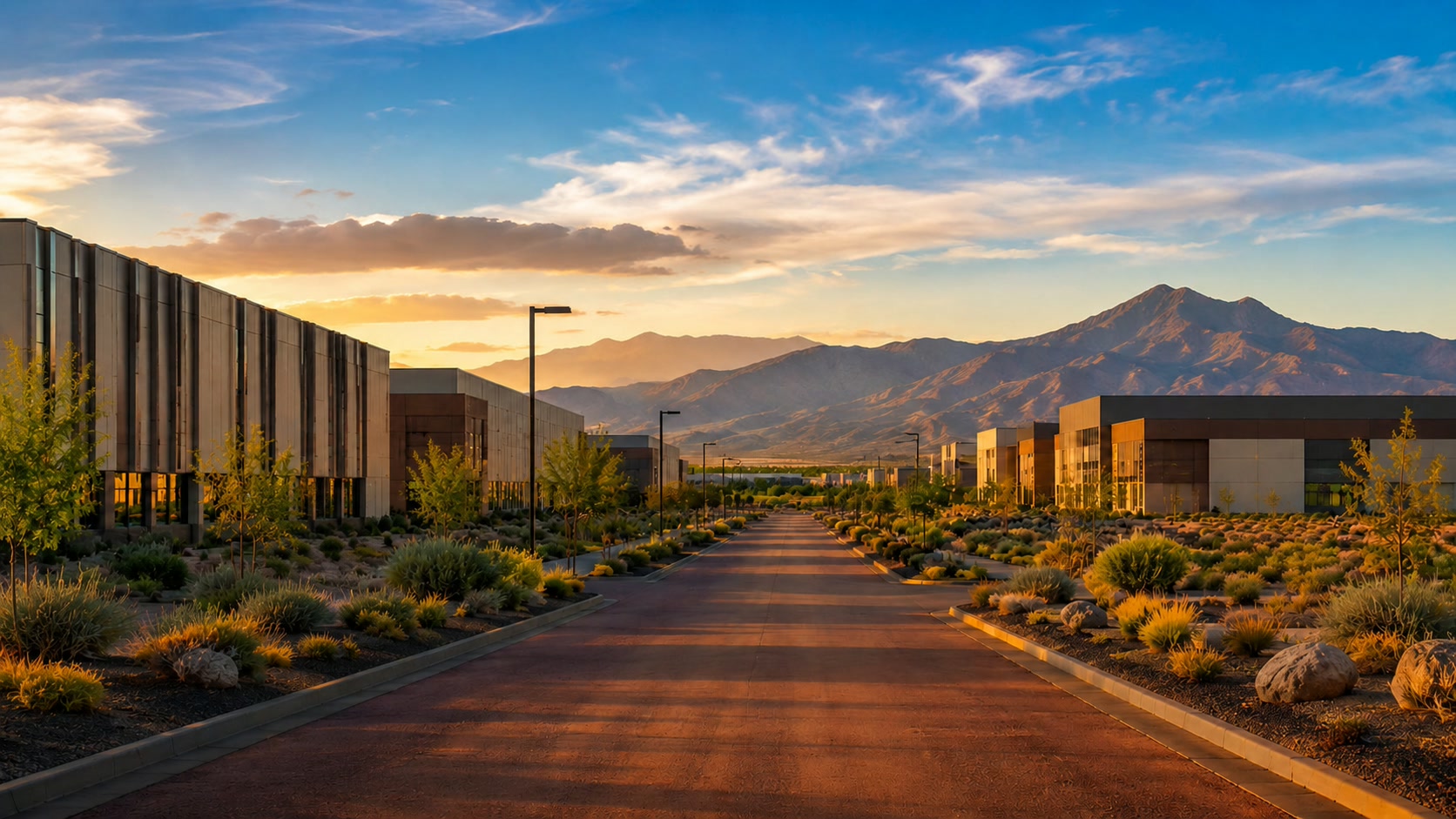
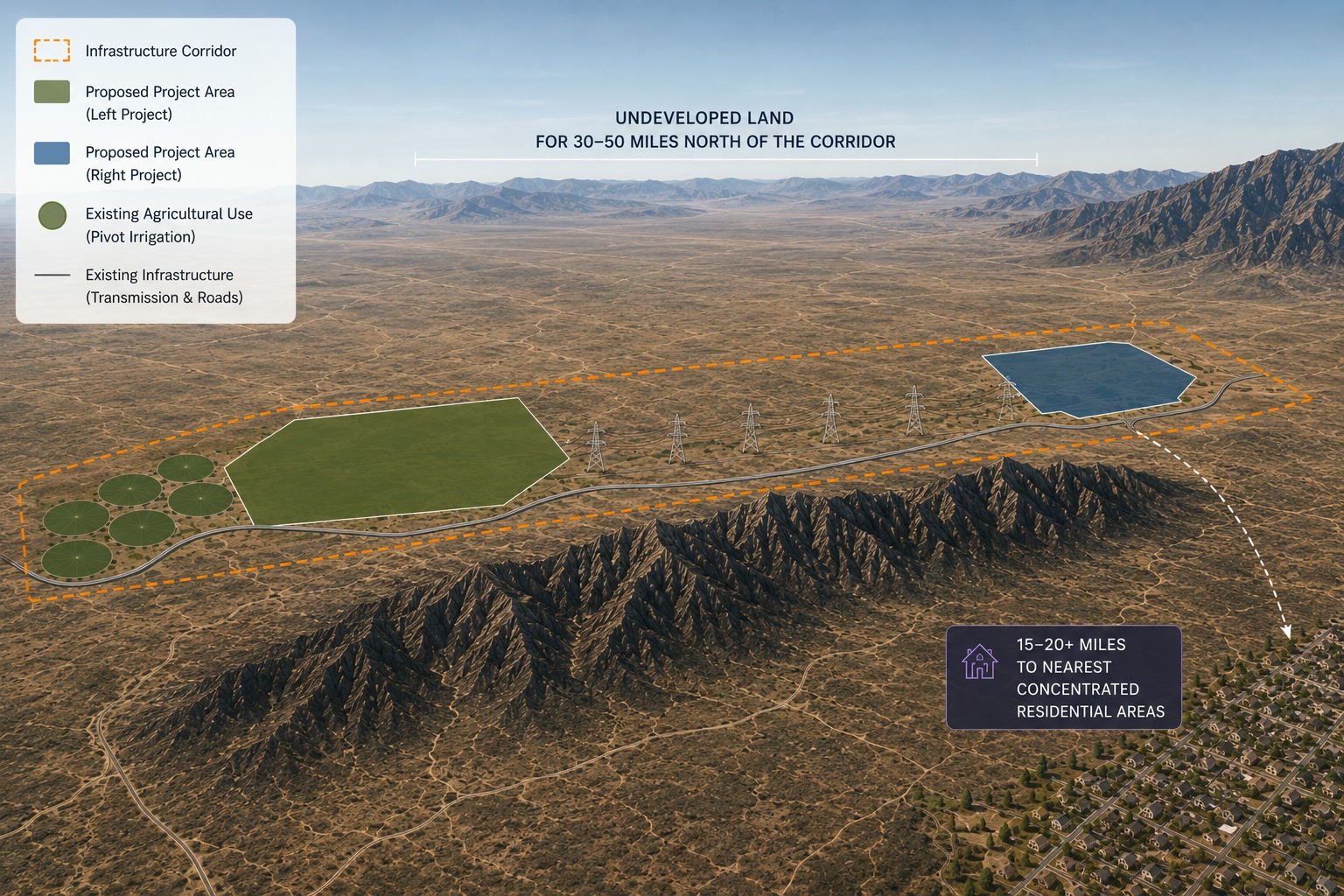
Explore standards for buildings, roads, buffers, signage, lighting, fencing, and landscape integration so industrial infrastructure respects the character of the region.

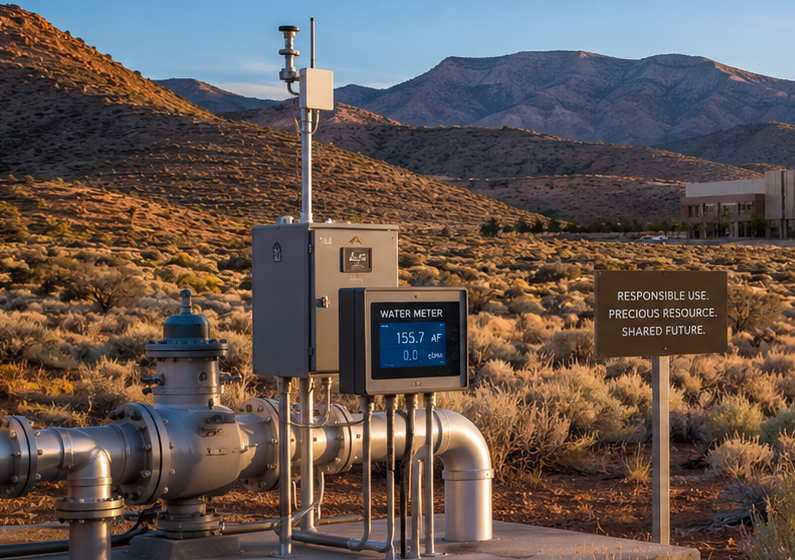
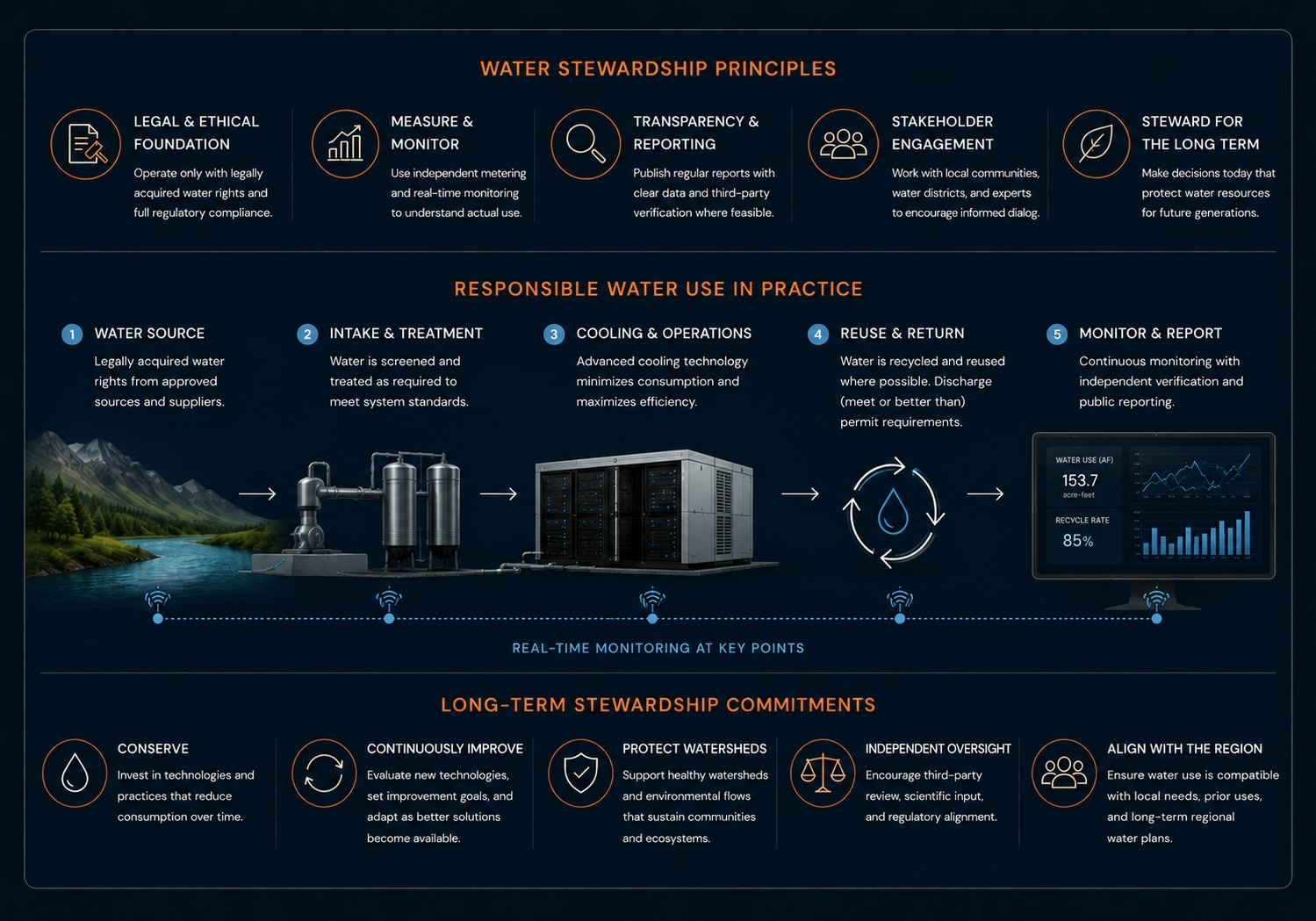
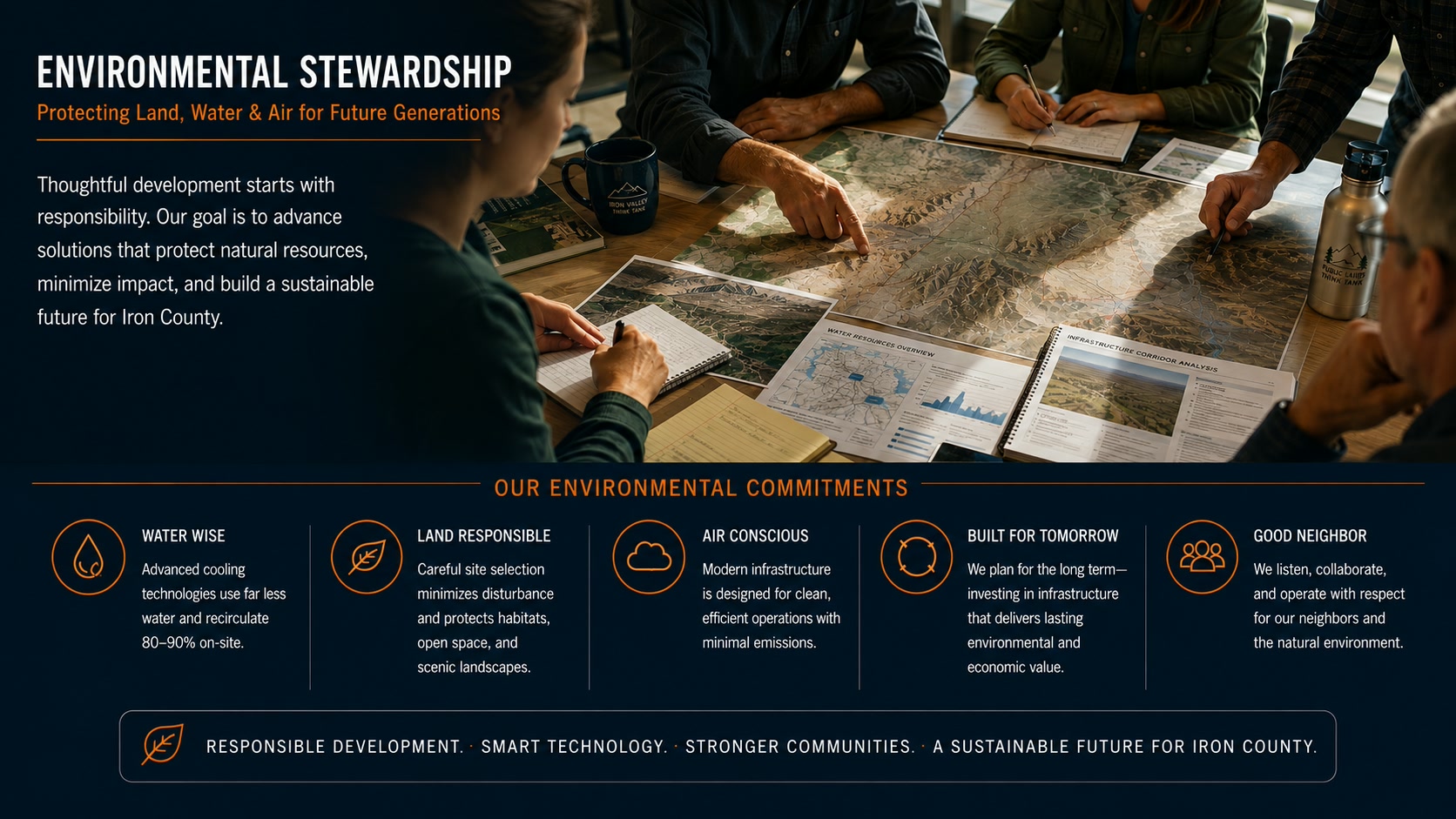
Invite independent experts to evaluate water rights, cooling systems, closed-loop options, metering, reporting, geothermal possibilities, and long-term sustainability.

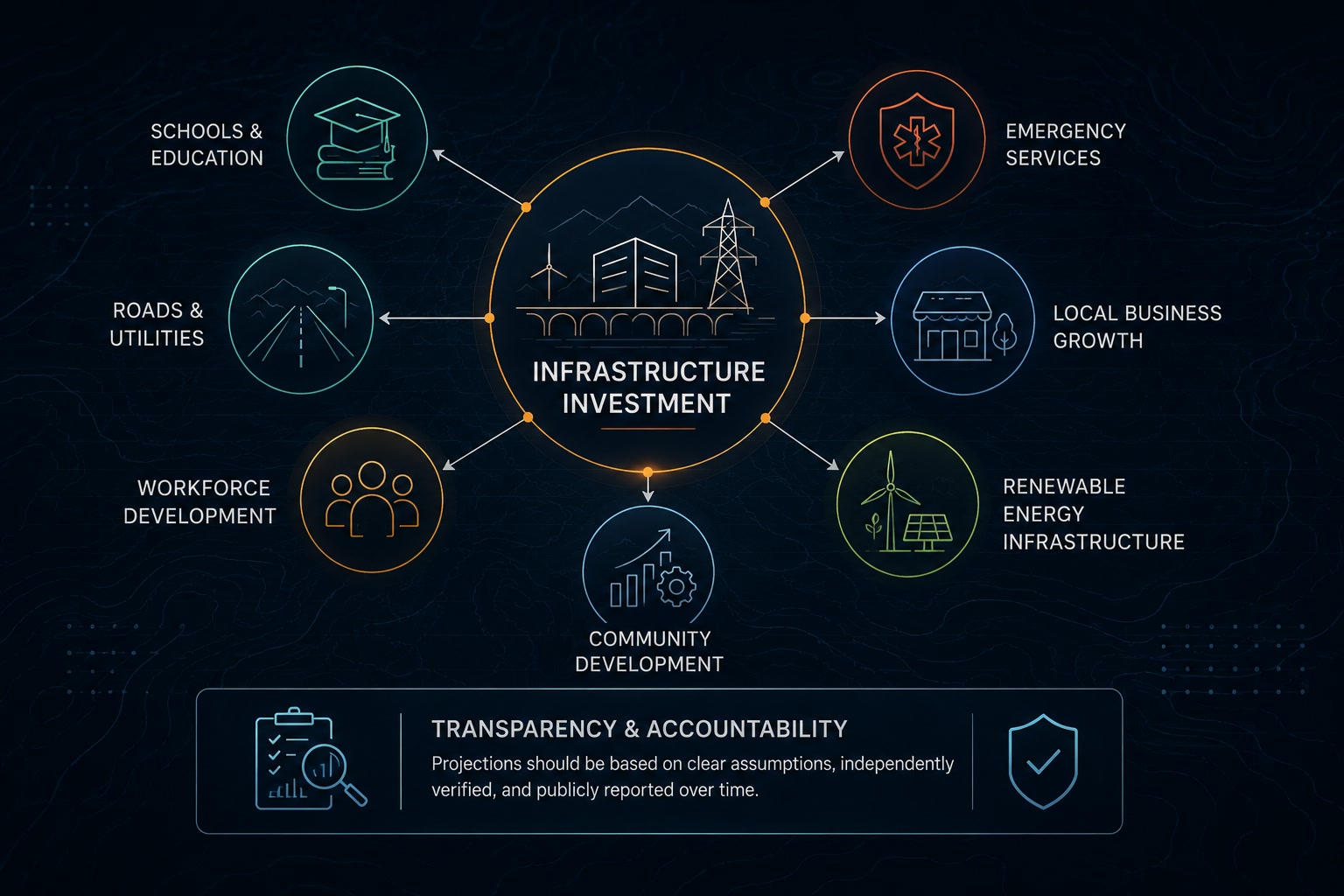
Study how tax revenue, workforce training, SUU partnerships, scholarships, infrastructure improvements, and public services can be aligned with long-term regional benefit.
Iron Valley can become a case study in how a rural region prepares for major AI and energy infrastructure without losing sight of community character, environmental accountability, and local opportunity.
The broader lesson is not only about Iron County. It is about how communities across the country can approach the AI infrastructure era with more transparency, more planning, and more shared benefit.
Iron Valley begins from a simple reality: local landowners, residents, educators, business leaders, developers, environmental experts, and technology companies all have legitimate interests in how this region evolves. The initiative should make room for those perspectives while remaining transparent about its own starting point.
We are adjacent landowners with backgrounds in technology, media, and commercial real estate who have spent years working on infrastructure, communications, and regional development projects. Our connection to the area creates a responsibility to approach these conversations carefully, transparently, and with long-term community impact in mind. The purpose of Iron Valley is not to speak for everyone. It is to help create a platform where more voices can participate constructively.
Artificial intelligence, cloud infrastructure, energy generation, and grid modernization are no longer abstract technology topics. They are becoming land-use, workforce, environmental, and economic-development questions for real communities.
Iron Valley exists to help those conversations become more informed, more transparent, more visual, and more constructive for the communities being asked to host this infrastructure.
The long-term opportunity is to build a pilot model that other regions can learn from: one that treats infrastructure not as something to blindly accept or reject, but as something to evaluate, shape, and align with community benefit.

Generational landowners and adjacent property owners should have a meaningful voice in the future of the corridor. Property rights, stewardship, access, land value, and long-term regional identity should be discussed openly and respectfully.

The broader question is what kind of future Iron County wants to build for its students, families, businesses, and residents. A responsible infrastructure strategy should connect economic growth with education, workforce, public services, and quality of life.
Iron Valley is looking for thoughtful participation from educators, environmental experts, landowners, business leaders, public officials, students, technology professionals, developers, and residents.
The first goal is simple: assemble a credible founding circle and publish a balanced discussion paper on how Southern Utah can responsibly evaluate AI infrastructure, energy, water, education, and community benefit.
Thank you. Your input can help shape the first Iron Valley discussion paper.
Iron Valley is not currently a formal nonprofit, university program, government agency, or developer-sponsored organization. It is an early-stage regional initiative and discussion platform.
The founders are adjacent landowners with backgrounds in technology, media, and commercial real estate. That interest should be disclosed openly and balanced by independent experts, academic voices, environmental input, and community participation.
The purpose is to explore responsible development, not to provide legal, financial, engineering, environmental, or investment advice.
As the initiative matures, the goal is to invite a broader founding circle that may include educators, landowners, environmental experts, civic leaders, infrastructure companies, and community members.